Half-life
Four-channel video and sound installation, 2017
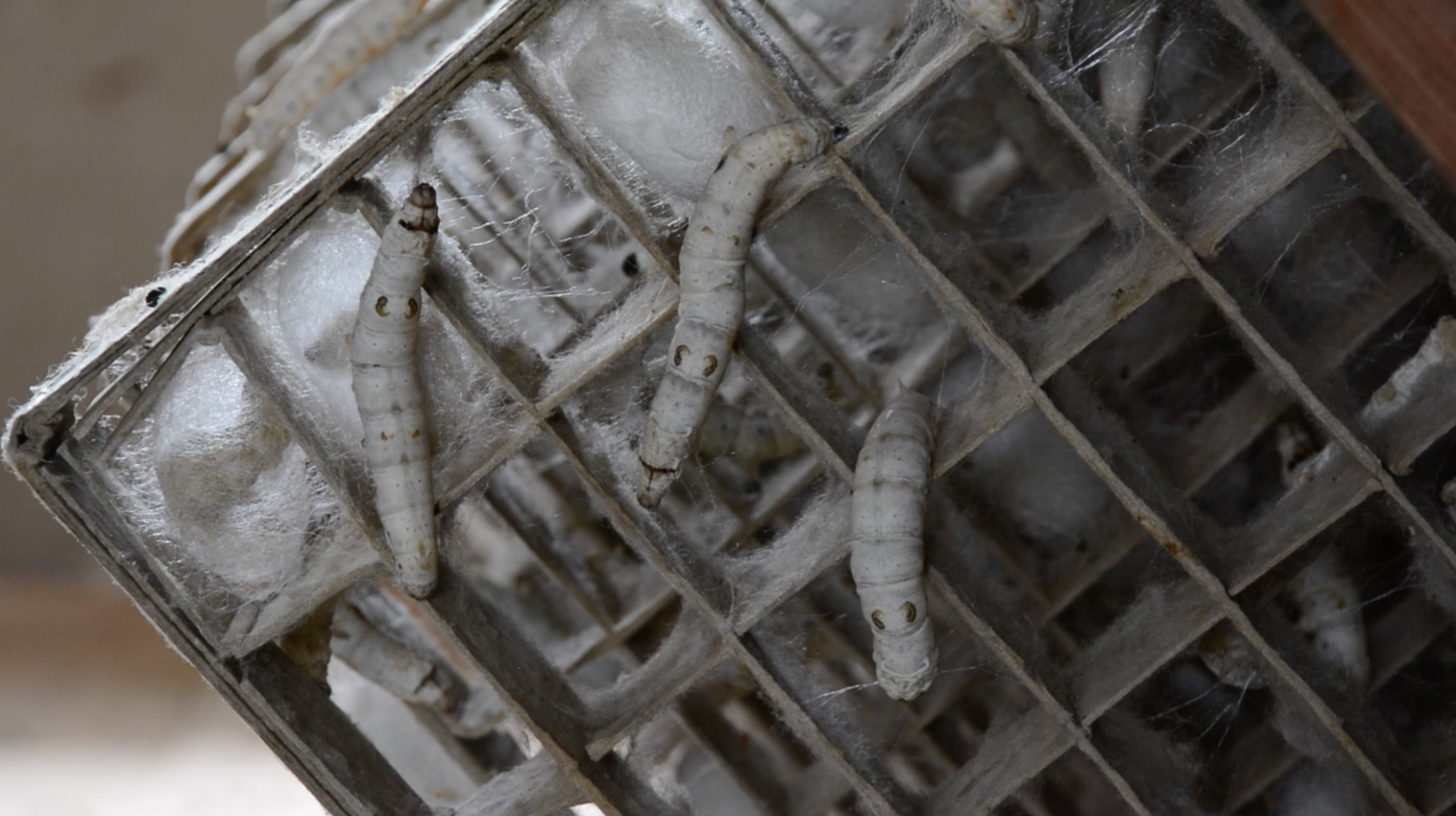
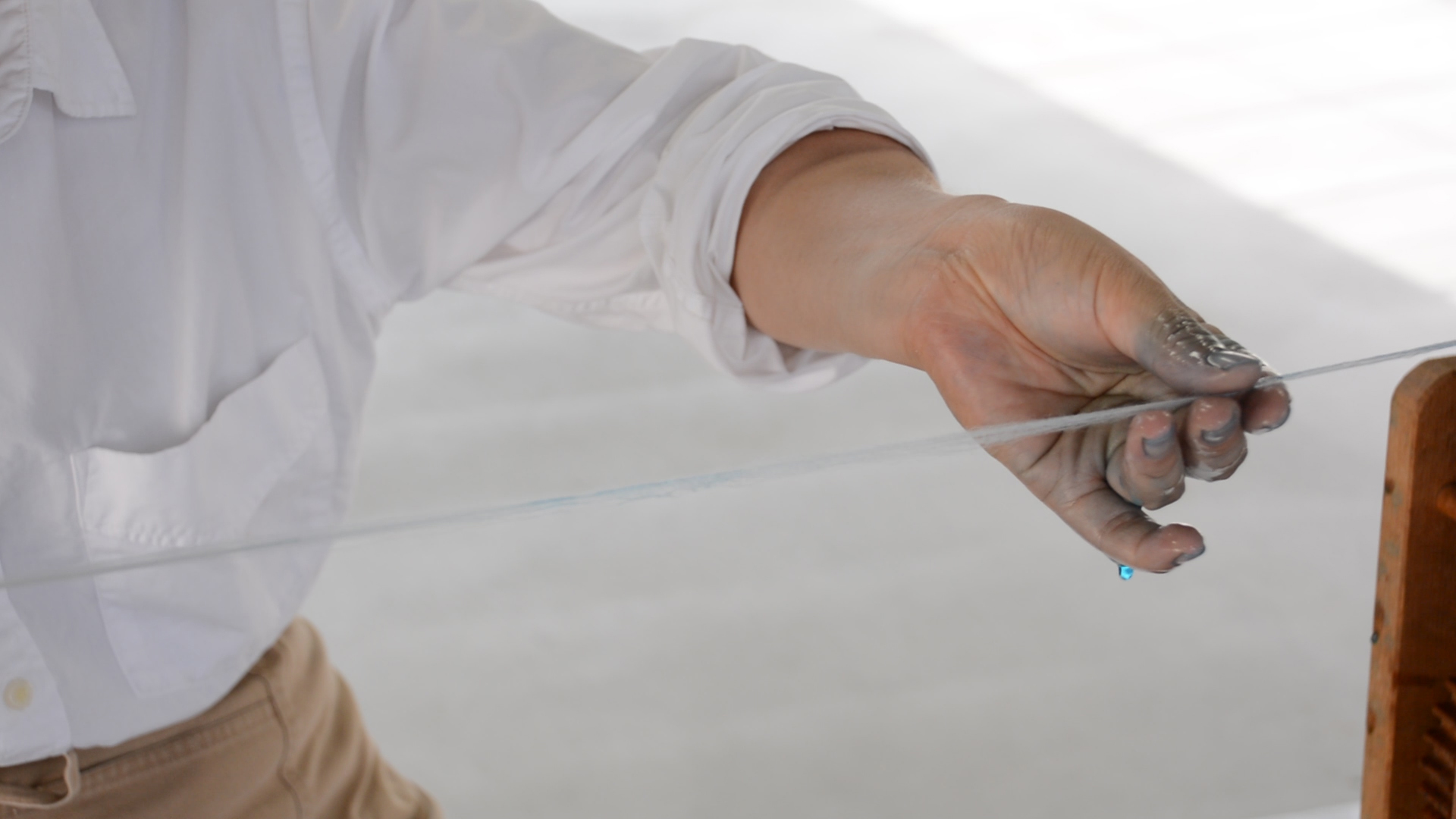
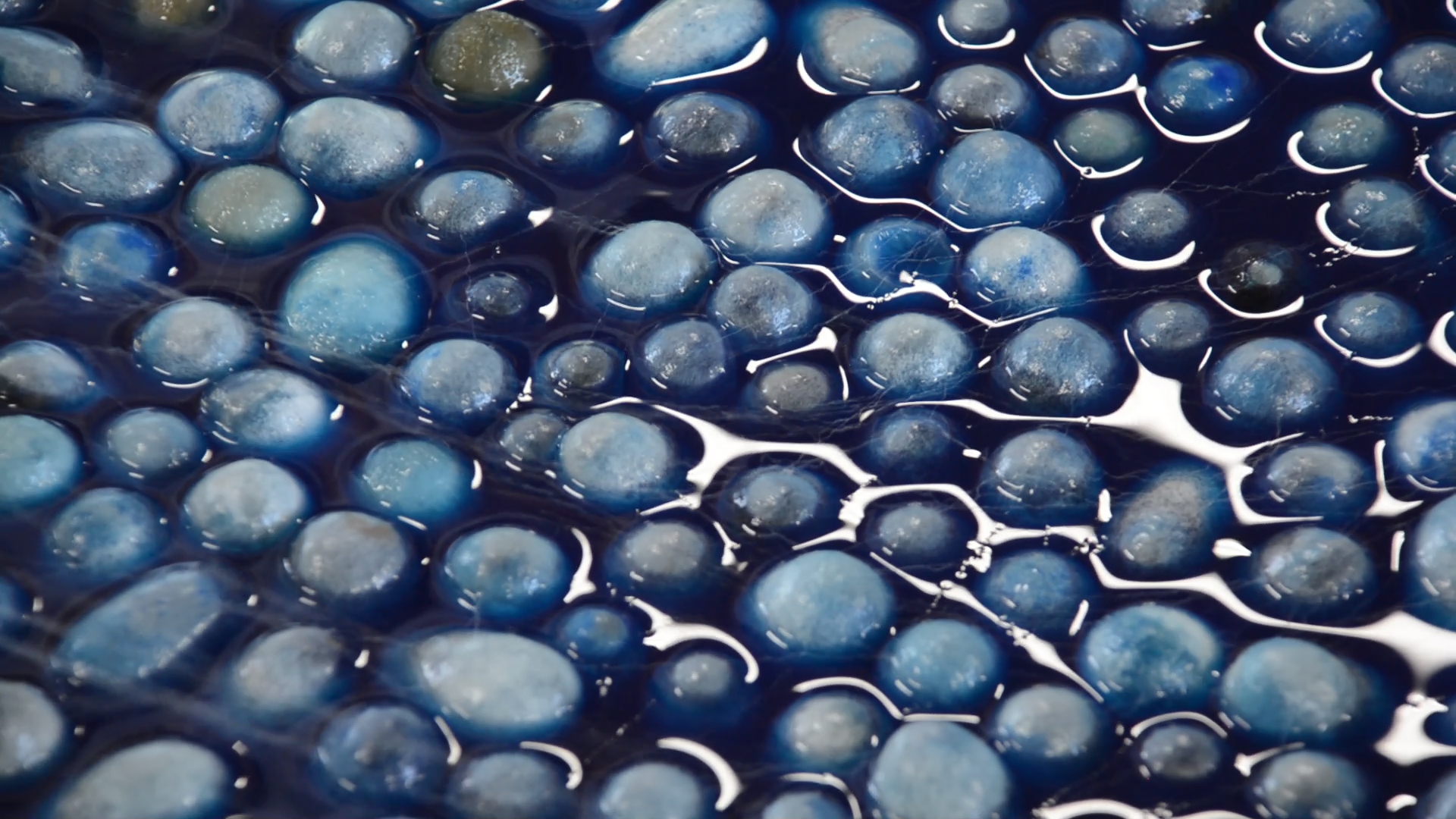
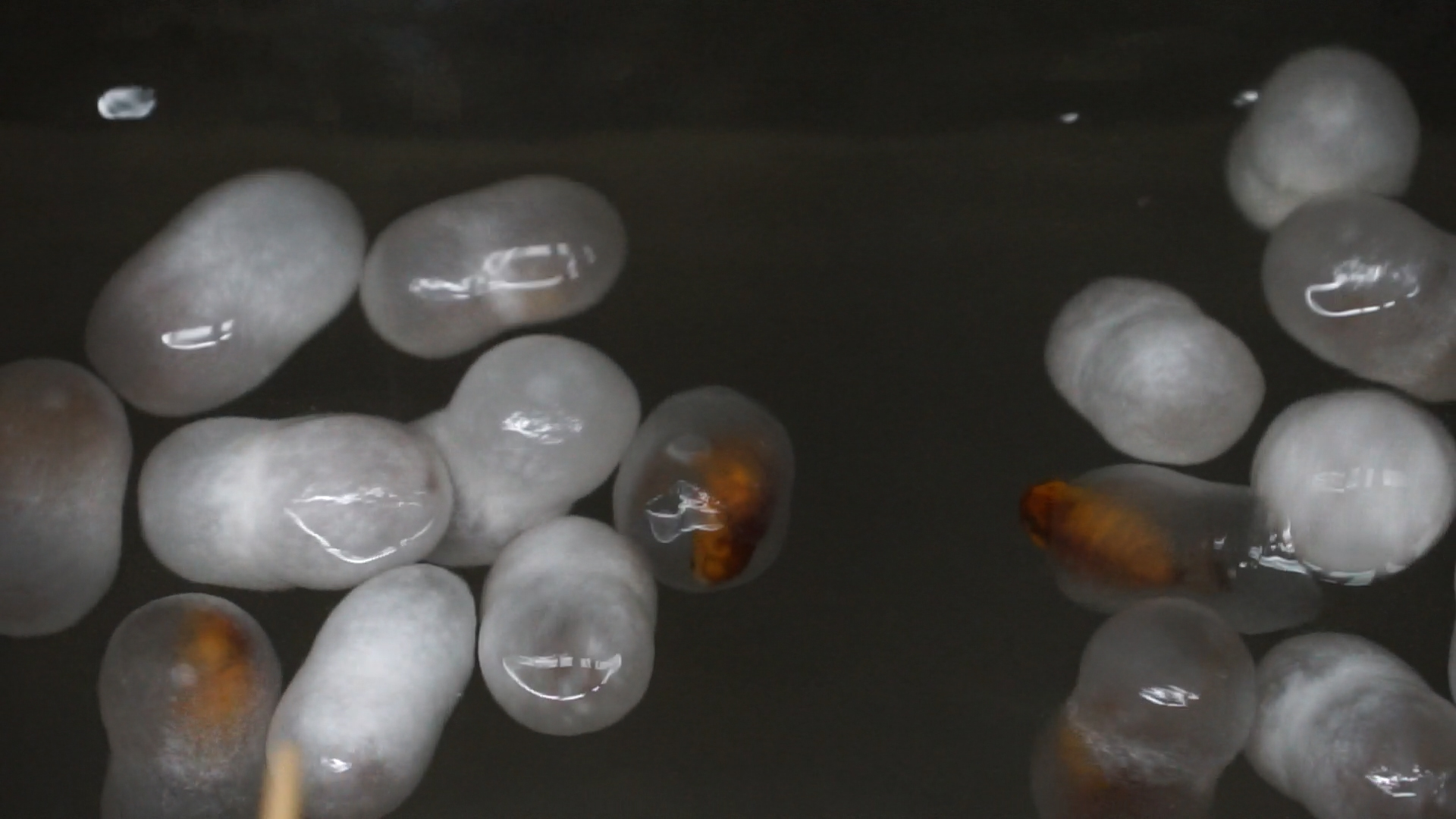
Filmed in Gunma Prefecture, Japan, six years after the Fukushima nuclear disaster, Half Life explores the cyclical transformation of nature through the history of Prussian blue pigment and silk production. Inspired by 19th-century ukiyo-e prints that used this first synthetic pigment (accidentally invented in 1702), the four-channel installation presents two pairs of videos: the first traces silk production from mulberry leaves eaten by silkworms to cocoons dyed in a Prussian blue bath using 19th-century techniques; the second parallels local water research teams monitoring contamination with a surreal studio transformation of the pigment into a blue pill, alluding to Radiogardase—a medication containing Prussian blue used to treat radioactive poisoning.
The work traces an arc from nature to industry to toxicity and back to remedy. As Michael Taussig asks in What Color is the Sacred: “Is not this ultimate deception the unforced, natural poetry, combining the manmade with the natural?” Half Life is a visual meditation on this contradiction—the word “plant” itself meaning both factory and living organism, both poison and cure.
The project was produced in the Arts Maebashi Museum artist-in-residency program.
Jun Igarashi (curator)
Toshihiro Fukunishi (production)
Participants: Nobue Higashi, Wataru Hiraish, Tetsuya Matsumura and Setsuyo Matsumura.
Image and Editing Keren Benbenisty
Sound Manuela Schininà
Text Brooke Larson