Blue of Noon
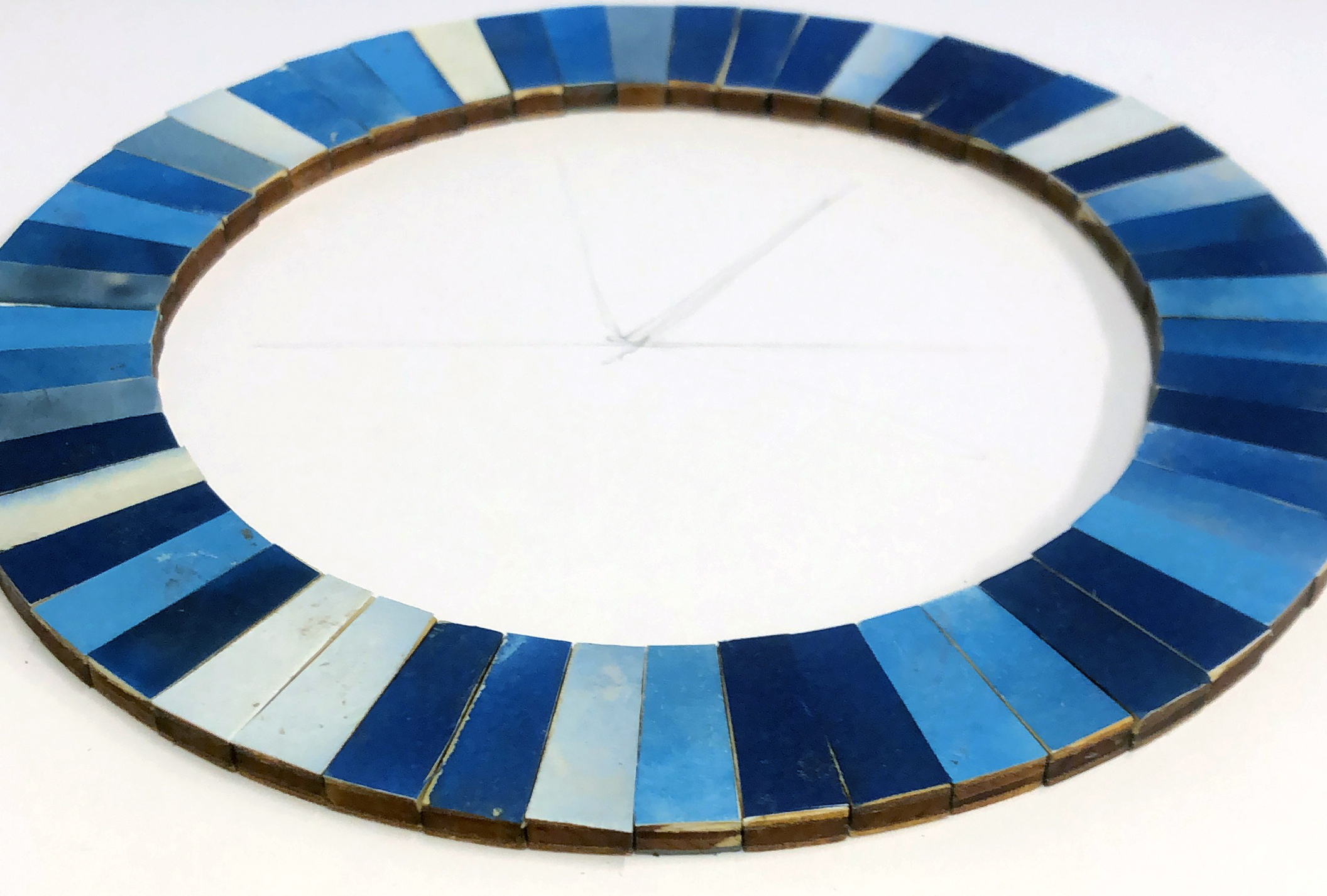
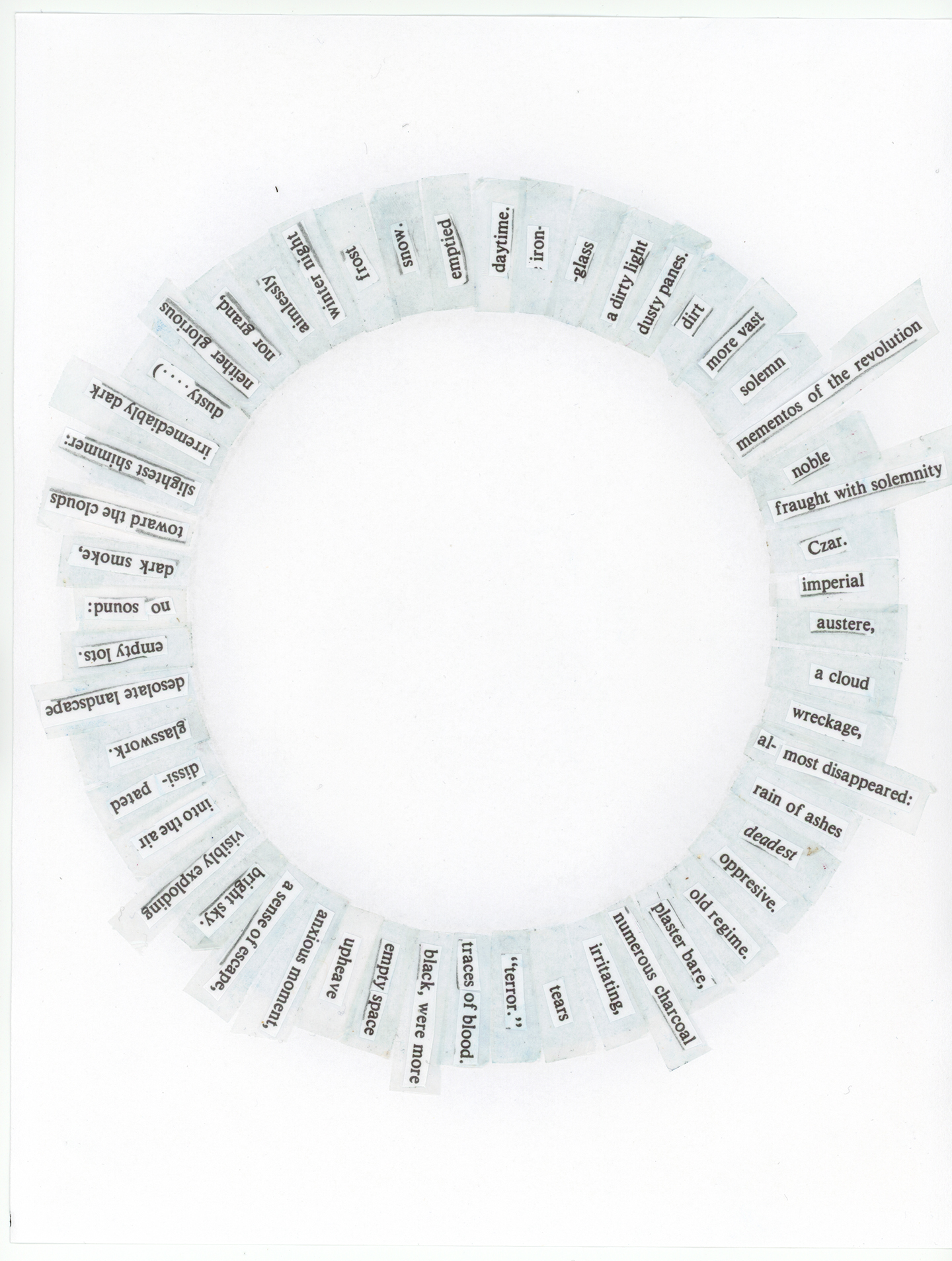
Model 1:10 Cyanotype on paper and wood and letter size collage. (proposal)
This work comprises two interconnected pieces that explore the transformation of language into light and light into material.
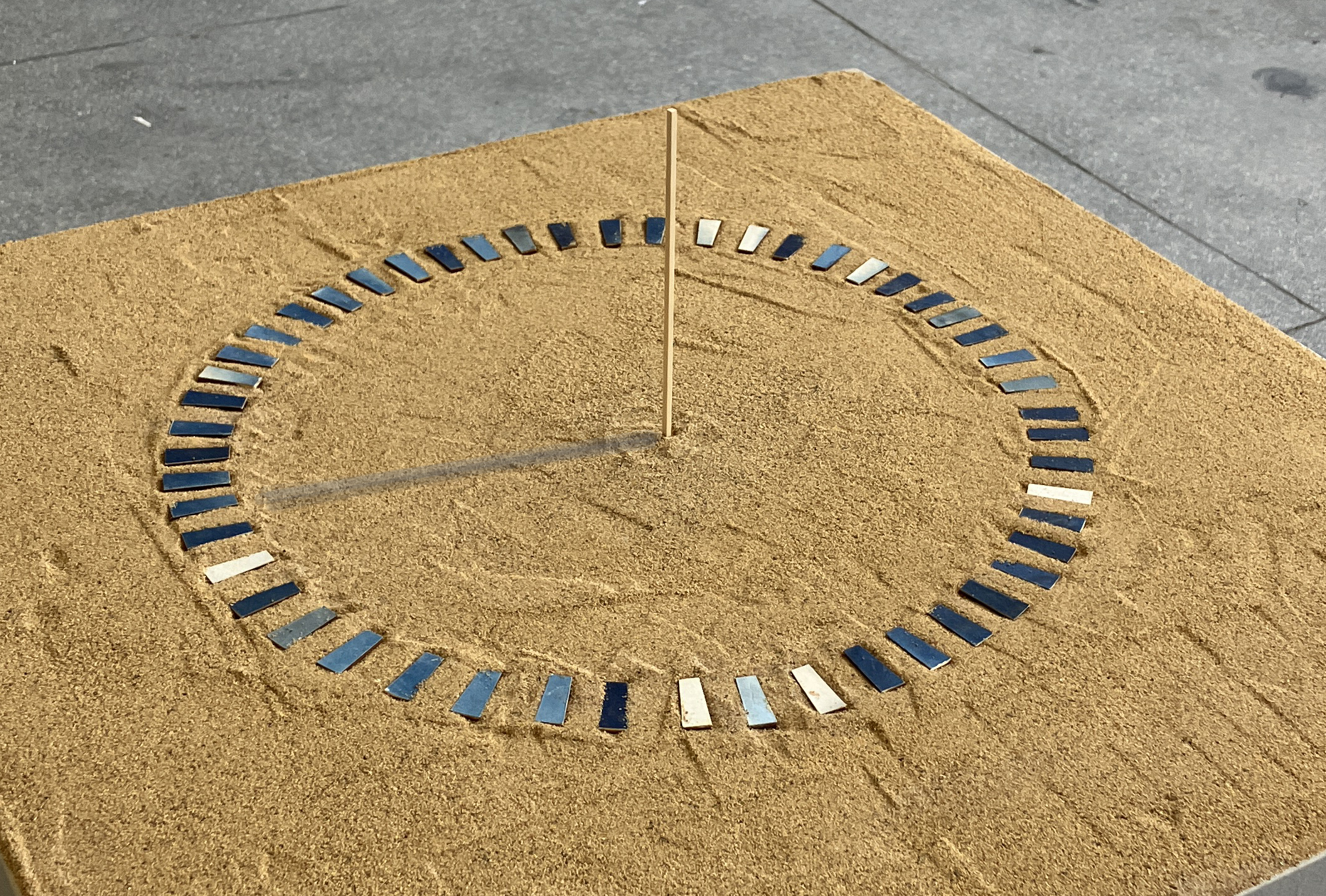
A model for a site-specific solar sculpture composed of 52 stones of different varieties set in a closed ring 10 feet in diameter. Over the course of the year prior to installation, all the stones will be treated with a sun-sensitive emulsion (cyanotype) and exposed to natural light, turning each into a different shade of blue due to its underlying color variations and divergent UV exposures. Any visitor who enters the ring will take on the role of a sundial blade, casting a shadow that will be a further manifestation of the power of the Sun and a reminder of the cyclical motions that govern nature and our sense of time. The 52 stones of the ring, representing the 52 weeks required for the Earth to complete a revolution around the Sun, will reinforce this theme. The installation draws partial inspiration from the cyanometer, a late-18th-century device composed, in its original form, of a small ring with 53 gradations of (mostly blue) color along its rim. Holding the device to the sky allows comparison of the various shades on the ring to the atmosphere, thereby permitting a measurement of the “blueness” of the sky. Blue of Noon will be a significantly enlarged, inverted version of the cyanometer that will draw attention to the ground rather than the atmosphere and allow the Sun—whose light produces the frequencies that we perceive as blue when looking at the sea or sky—to mark the earth in a way that is simultaneously natural (shining on the stones) and unnatural (mediated through the manmade emulsion applied to the stones).
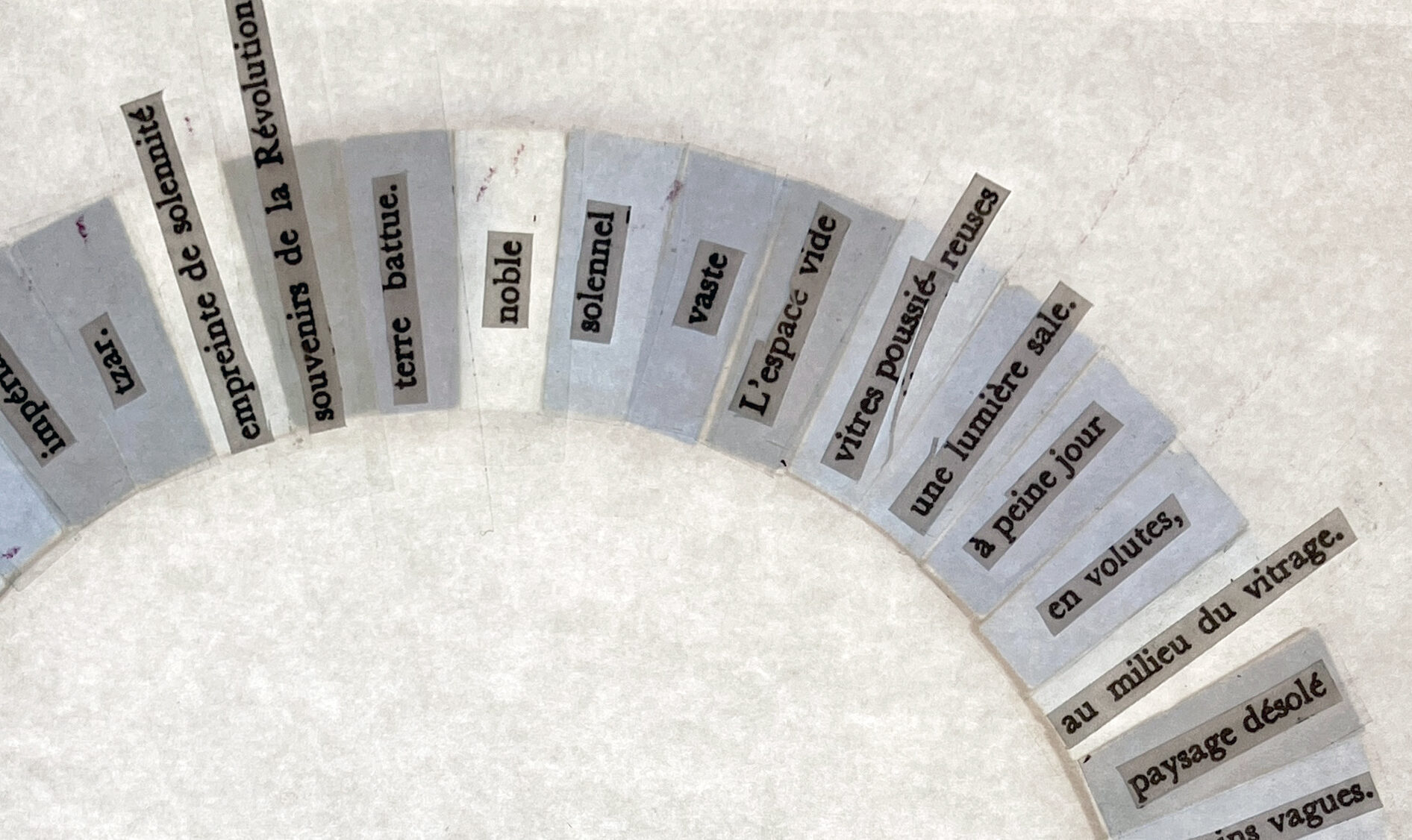
The text-based collage is an index—a navigational tool for naming and reading the chromatic variations present in the sculpture. Georges Bataille’s dream sequence from the erotic novella Blue of Noon (Le Bleu du Ciel)—a fevered vision of revolution threading together political upheaval, existential dread, and bodily transgression—is deconstructed into fifty-two words that become names for the distinct blues already generated through exposure. Like the charcoal inscriptions Bataille describes, crude markings that are “more like traces of blood,” this linguistic map transforms descriptive language into a system for measuring what light has already inscribed on matter.
Together, model and collage enact multiple acts of translation: light becomes material trace, material trace becomes color, color becomes word, and conceptual vision finds provisional form. Each translation leaves a gap—the space between source and outcome becomes visible, much as cyanotype chemistry makes visible the otherwise invisible action of sunlight on sensitized surfaces.